Project Houston Weekly · July 6–10 (Week 3)
 Achuta Kadambi
Friday, July 10, 2026
·5 min read
Achuta Kadambi
Friday, July 10, 2026
·5 min read
Houston’s spatial AI has received a power-up and is now able to better read dense plansheets, e.g., 36-by-24-inch sheets of fine print. We had a fun little story with the city inspector this week.
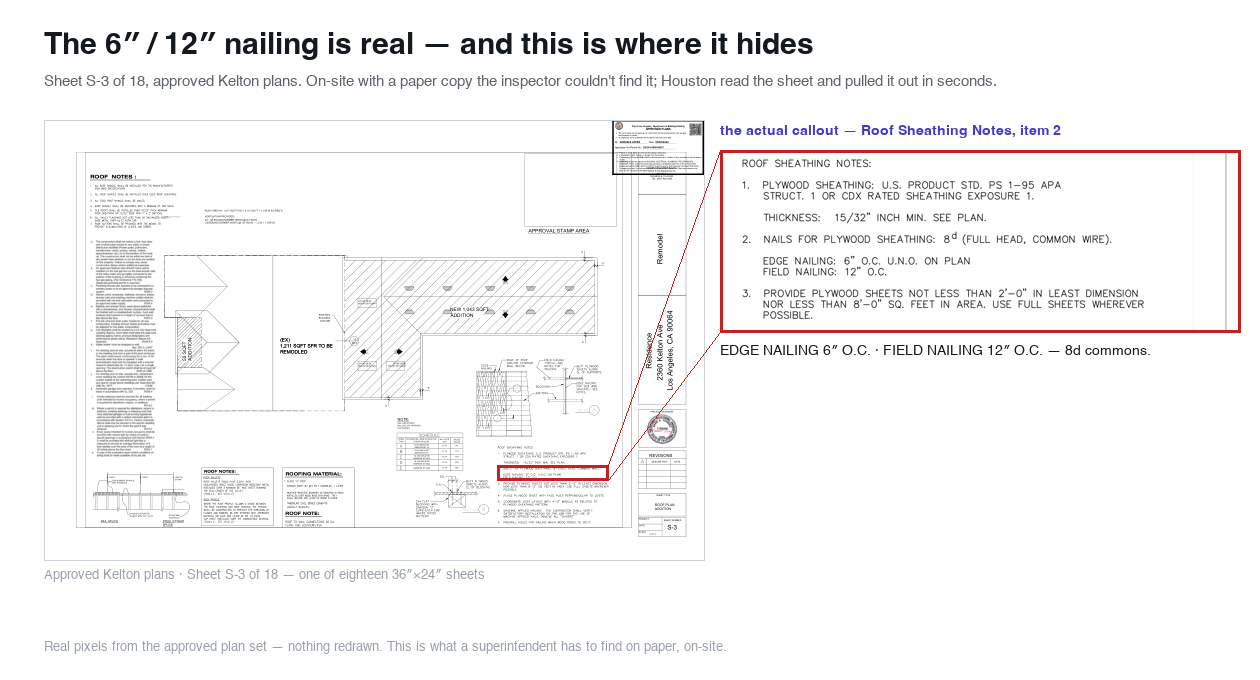
In particular, yesterday an inspector came by Kelton and failed our floor sheathing check because he couldn’t see the nailing standard on the plansheet. We later realized — thanks to Houston — that the 6x12 nailing standard was in the plan, in 3 places. Next time this happens in the field, we can prompt Houston on our phones and let the inspector know before he files it as a correction for us.
This is a sign of Houston helping company strategic goals, which is great to see in a week 3 update.
Technical Upgrades to Houston
In addition, we upgraded some of Houston’s architecture. Houston can now decide on its own cache memory structure. If it can read from the registry cache, it will often return a quick answer, but can be asked to read from specific documents if we need something more accurate. We can manually add things that we think are important to cache: example, our new office address at 4676 Admiralty Way, Marina Del Rey, CA 90292!
We also made improvements to file ingestion. Previously, Houston was read-only while it was in testing. It could read files in the Drive but couldn’t create, move, rename, merge, or convert. So certain everyday asks — “file this into Marinette,” “merge these receipts,” “clean up the inbox” — were blocked by intent.
To enable this capability, we interfaced Houston with Google Drive SDK, that includes pre-authenticated info. Since Google’s SDK is only one way to modify files, we also added more powerful tools that can be used to merge three permit scans; tools like pypdf, Pillow, pandoc are now in the tool calls that Houston has access to.
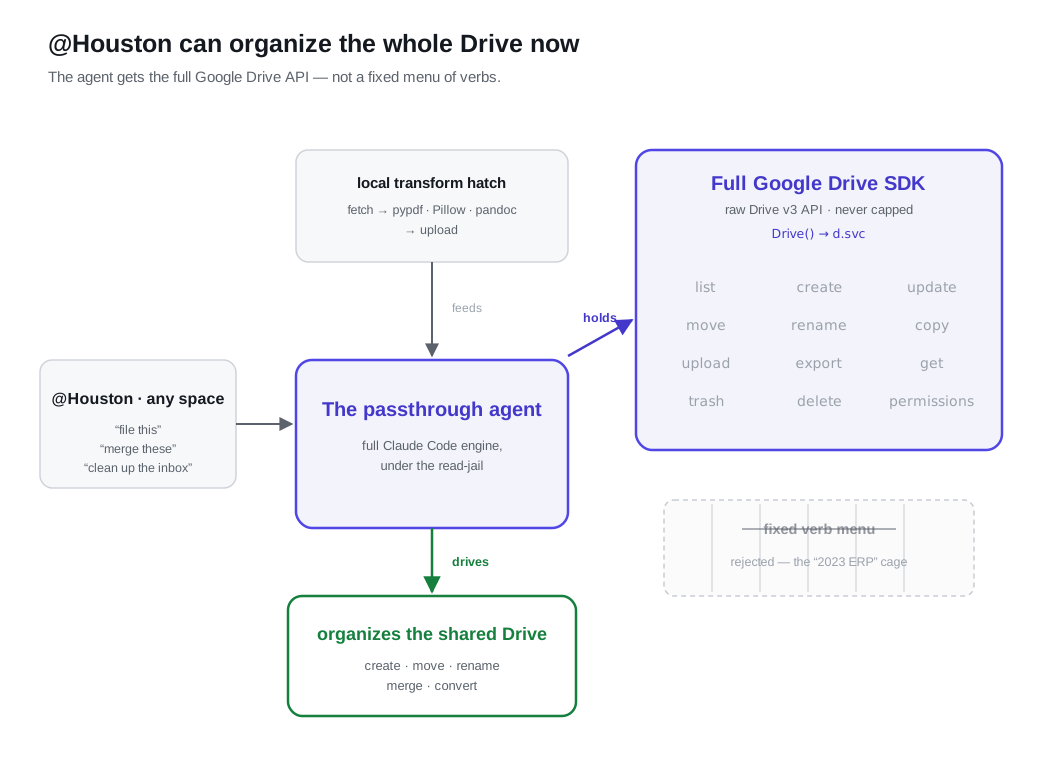
Example of some New Chat Capabilities
Below are some condensed versions of new chat capabilities after this week:
After this week
2026-07-08_calsurveyors-invoice.pdf. (Drive: move + rename)
After this week
Kelton-permits-2026-07.pdf and dropped it in Kelton / 20_Permits. (fetch → pypdf merge → upload)
After this week
Improving Houston’s Wall Clock Speed
Handing Houston more power makes some answers heavier, so we spent effort on speed. Two levers do most of the work. First, read on demand and cache what you learn: Houston pulls a file’s bytes only when a question needs them, and the understanding it extracts is written once and reused — so the second question about a plan set doesn’t pay to re-read it.
The counter-lever is knowing when not to rush. Some questions are genuinely hard and worth more compute time. An example is the 6×12 below, which was worth a few minutes to read eighteen 36-by-24-inch sheets of fine print.
Case Study: Houston versus the LADBS Inspector (6x12 nailing)
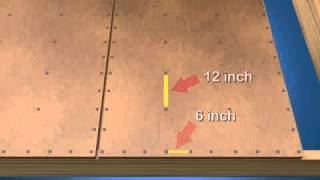
This week on Kelton we had a city inspector come by to inspect the floor sheating. He was not happy our crew used 6x12 nailing (i.e. 6” inch nail spacing at edges, 12” at center). The inspector couldn’t find the sheathing nailing pattern on the paper plans and wouldn’t sign off.
Framing was about to stop for a re-inspection, but when we pasted the thread to Houston we realized that the plans not only had the 6x12 specified, it was specified in three places. This bodes very well for using Houston in the field on the mobile phone.
Why couldn’t the inspector see it? He was on-site with a paper copy — eighteen 36-by-24-inch sheets of fine print — and the callout is a note the size of a fingernail, buried in the section notes rather than broken out as a big labeled “nailing schedule.” Houston read the same sheet digitally. Here’s the actual plan, zoomed — exactly what the image-reading we hardened a couple weeks back now buys us:
An open question: how much rope to give Houston?
All of this forces the debate we’re actively having: how agentic should Houston be, versus how many guardrails? This week we deliberately took some guardrails off. The chat agent can now write, not just read. It got the whole Drive API instead of a small, safe menu of approved verbs.
More power makes it more useful: it should be able to actually file the invoice, merge the permits, and settle the 6×12. But every guardrail we remove is another way it could get something wrong. In the code, we use reversibility and logging as a way that we don’t destroy files. For example, even though we have a “Trash” we create that as a separate folder that has permanence, rather than the Google Drive trash which auto-deletes every 30 days.
Goals for Next Week
With Houston being a bit more mature, we are thinking it’s time we relate it to more strategic company goals. In this case, I feel supporting the goal of $XXX per sqft that we’re aiming to demonstrate on Kelton is key — as that construction edge applies to all our projects.
I do not have clear line of sight to how this will be done — that will be on conversations with the MTS team next week, but likely involves some level of interfacing between Horizon and Sentinel.
Houston backlog
| Backlog Task | What it is |
|---|---|
| Interface Houston with Sentinel and Horizon | Connect the systems so they share data and act as one. |
| Move Houston to the right server hardware | Off the laptop onto proper hosting, with secrets in a store and its own service identity. |
| Continue to evolve Cambrian’s data schema | Keep refining the source-of-truth schema for files and the registry. |