Project Horizon Weekly · June 29–July 3 (Week 2)
Modeling and rendering 2360 Kelton, checking with the GC on what’s actually buildable — and a first look at the platform going live next week.
 Sasha Vilesov
Friday, July 3, 2026
·4 min read
Sasha Vilesov
Friday, July 3, 2026
·4 min read
This week was hands-on. My primary focus was modeling and rendering 2360 Kelton Avenue and interfacing with the GC to confirm what was actually buildable on site — before any of it turns into a purchase order or work in the field.
The concrete decision we were resolving: should the front of the house include a porte cochère (a covered drive-through entry) or not? It’s a small change geometrically, but it drives the street-facing facade, the driveway layout, and the cost. Rather than debate it in the abstract, we modeled both options, rendered them, and put them in front of people who can read the market.
Modeling
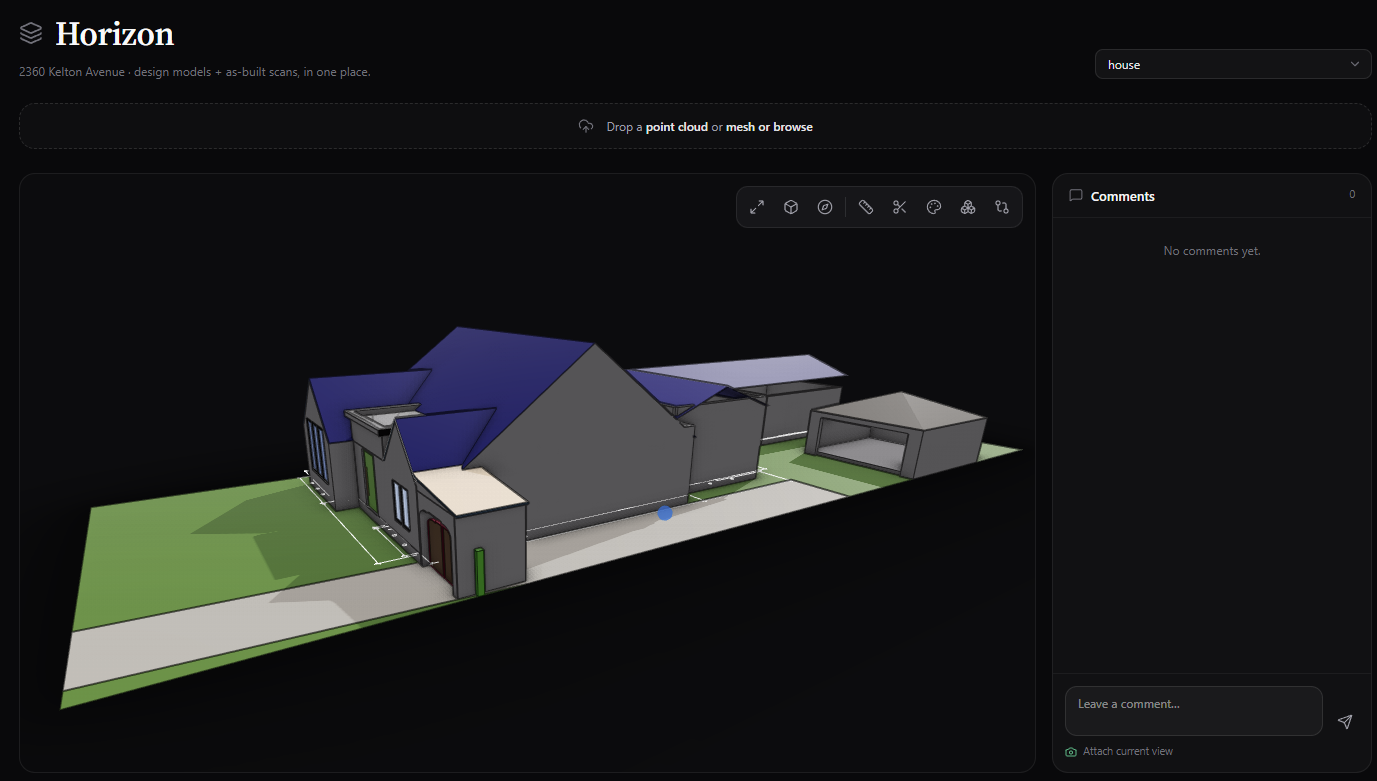
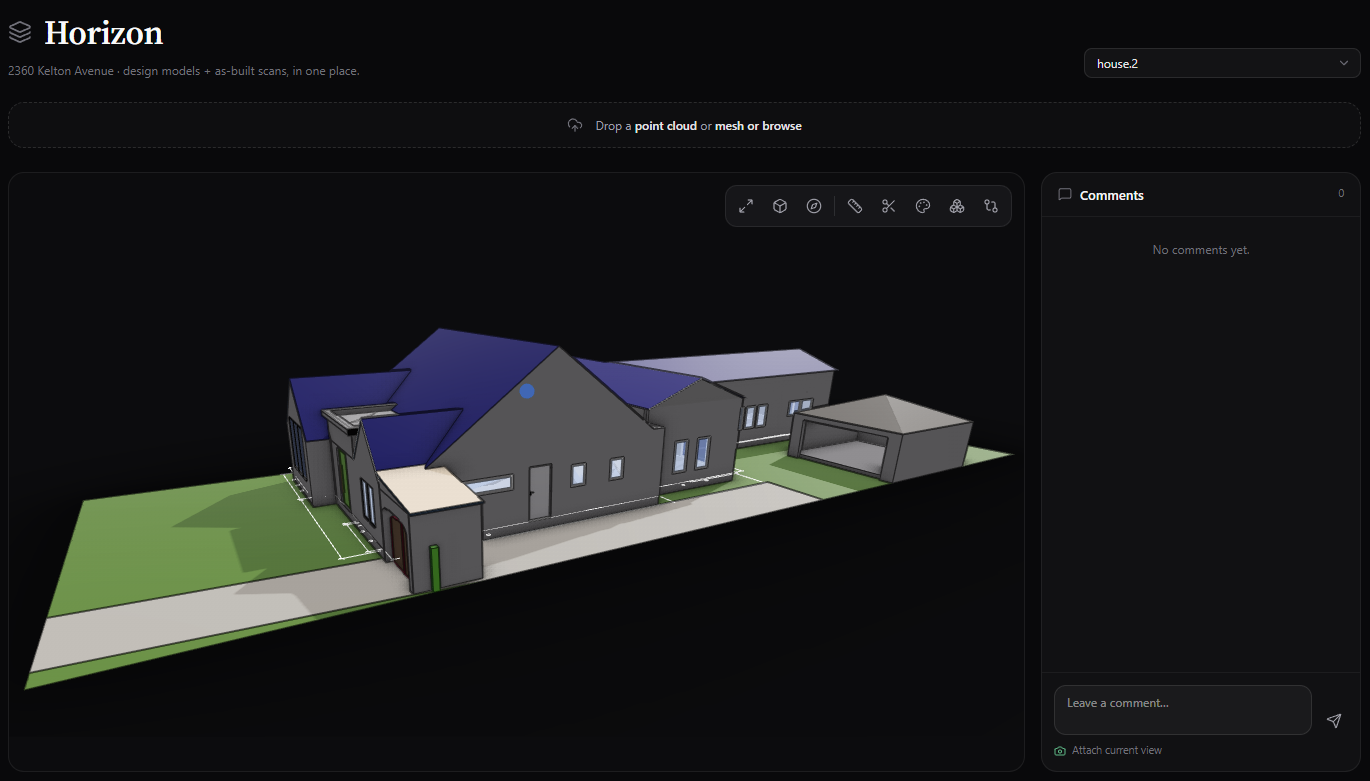
First we built the two massing options straight from the site model — same house, same footprint, one with an open driveway and side fence, one with the porte cochère added.
| Without porte cochère | With porte cochère |
|---|---|
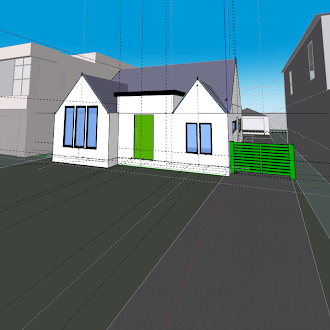 |
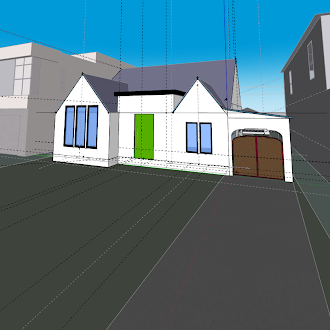 |
The model is intentionally low-fidelity — the goal is correct geometry and proportions, not finish. The porte cochère adds structure at the entry and changes the driveway layout; the open-driveway option keeps the frontage clear.
Alongside the porte cochère question, two other decisions are now locked: ceiling heights and front door dimensions. These feed directly into the model and are on the critical path — framing starts very soon, so the rough opening for the door and the plate heights need to be fixed before the crew frames the walls.
The model also captures the site accurately, not just the house: the driveway, the front-yard setback, and the side setbacks are all modeled to their real dimensions, along with rough 3D massing of the neighboring houses. Surrounding context matters for design — the facade and porte cochère have to read well against the adjacent structures and the street, not just in isolation.
Rendering — ablating the decision
Rough geometry is hard for most people to react to. So we take the same model and render it photorealistically, then ablate the decisions one at a time to make the choice legible. Here that’s a 2×2: two facade styles crossed with porte cochère vs. no porte cochère.
| Without porte cochère | With porte cochère | |
|---|---|---|
| Style 1 | 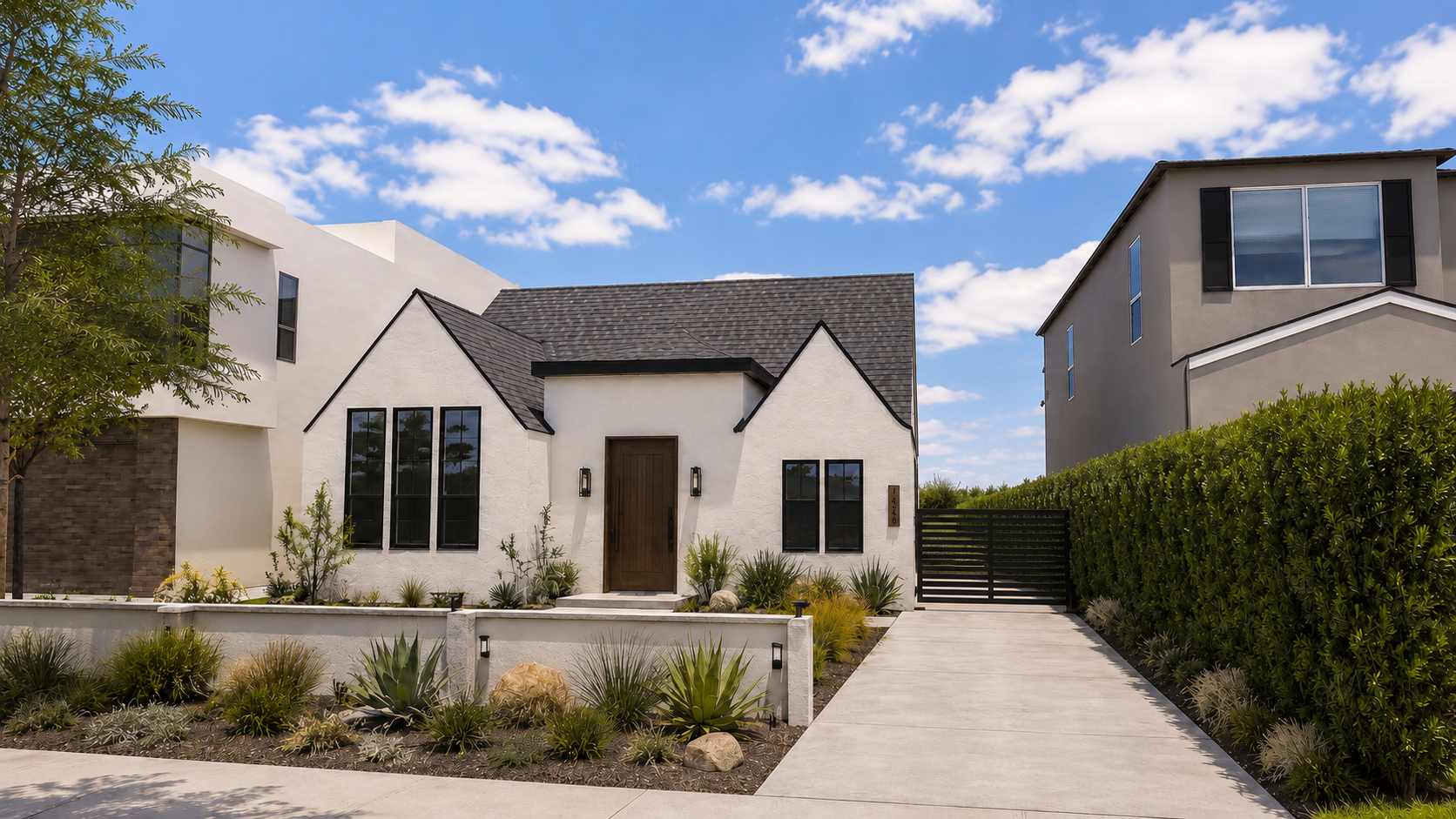 |
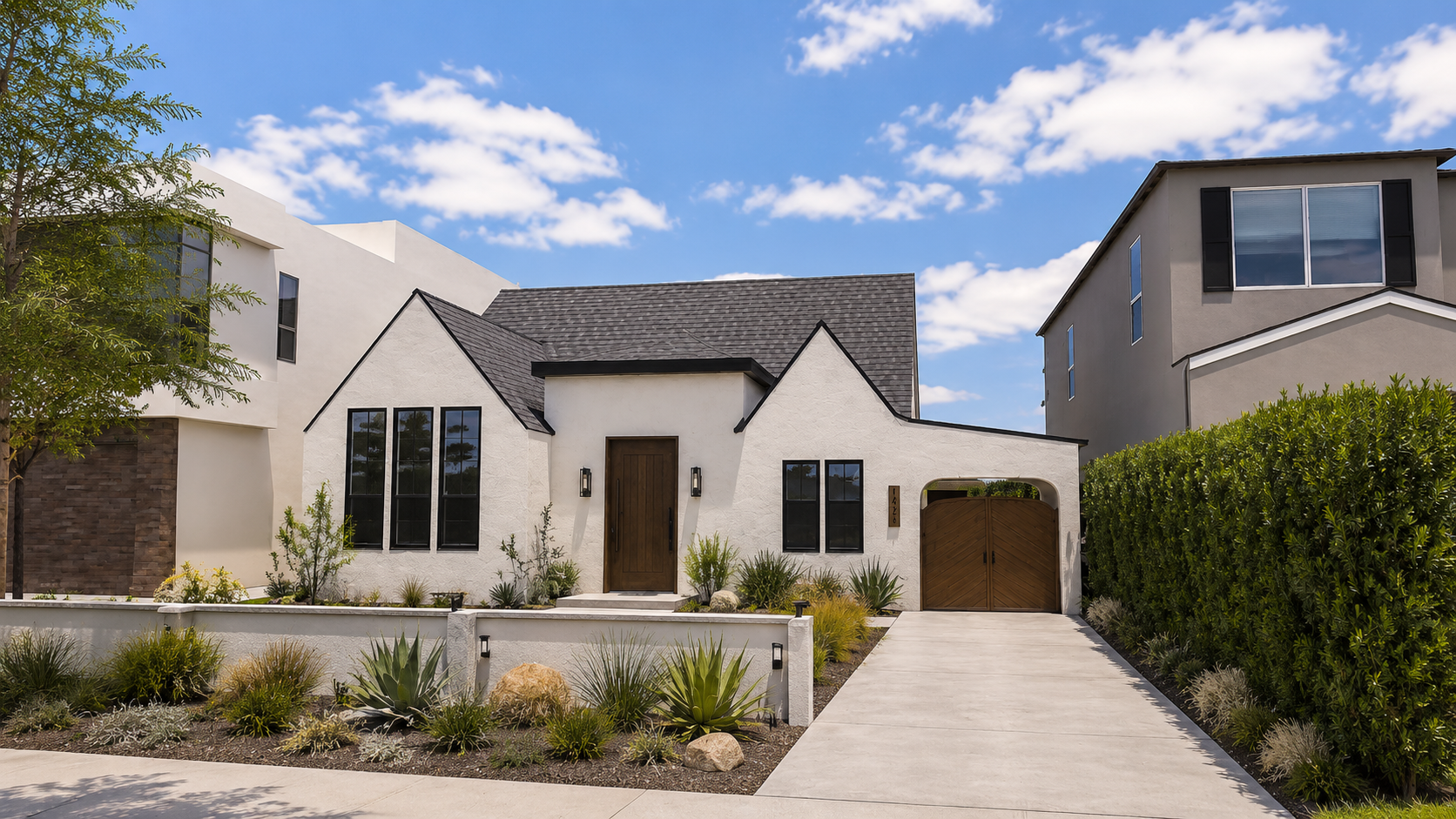 |
| Style 2 | 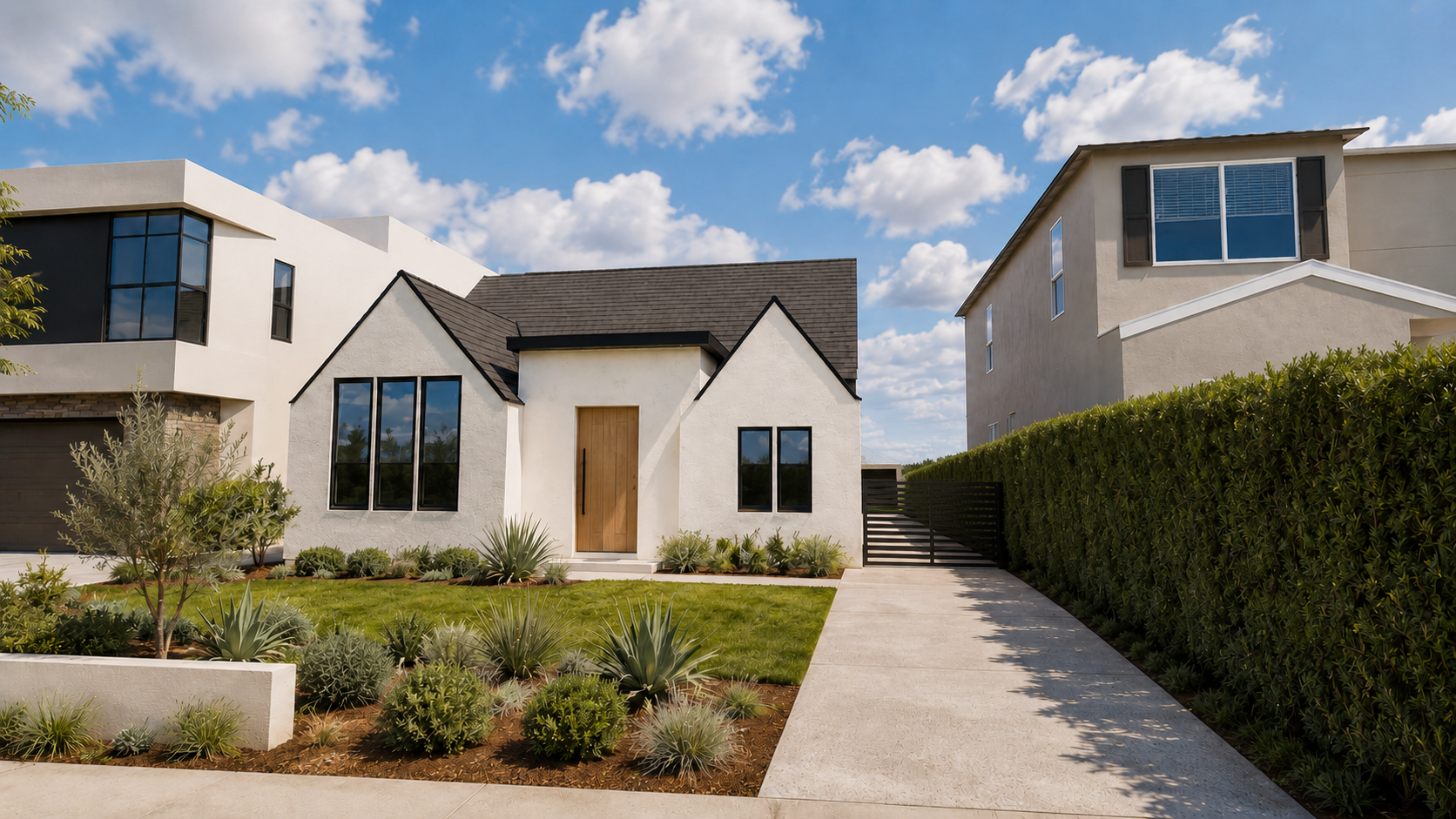 |
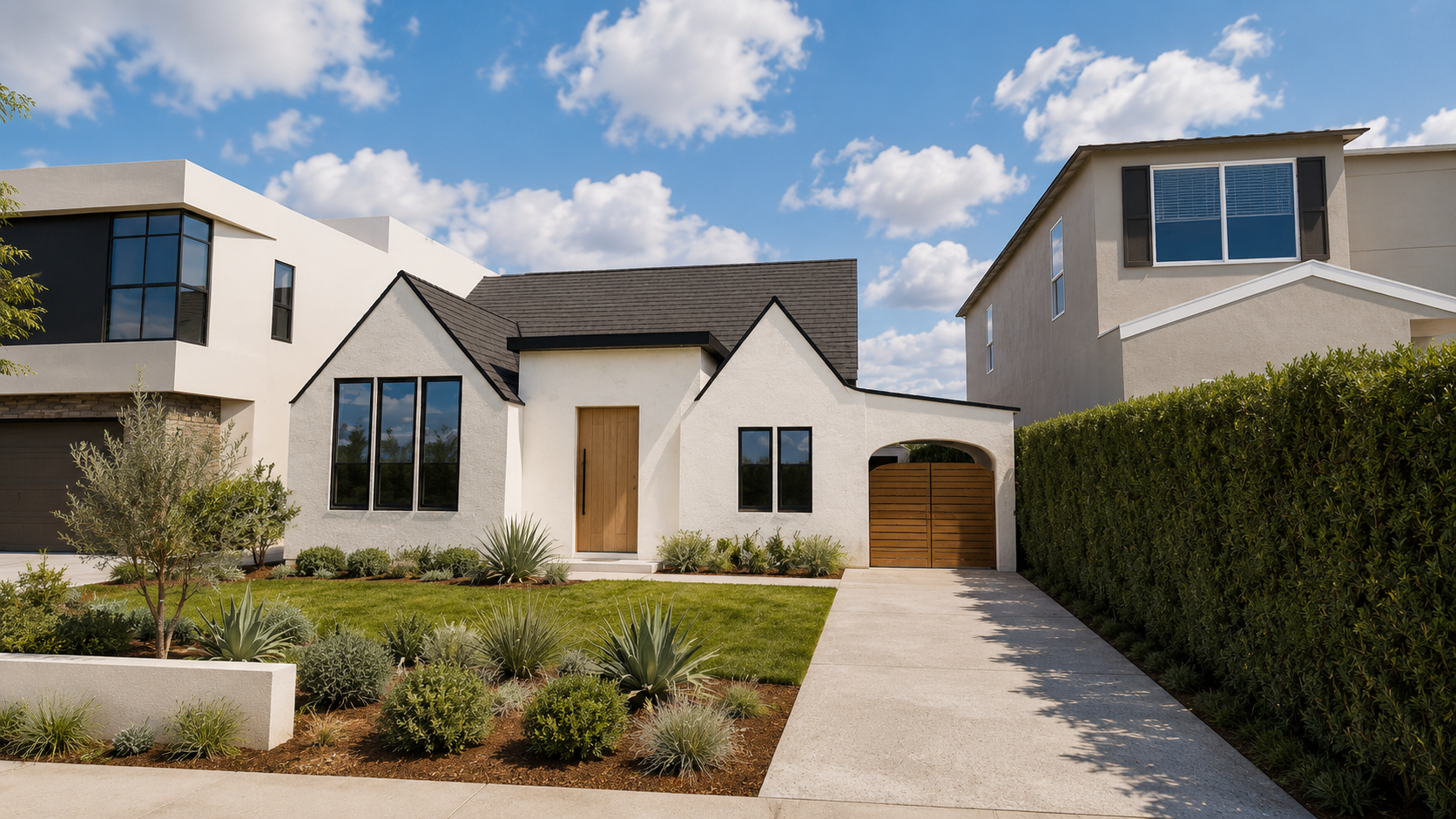 |
Presenting the options this way — one variable changing at a time — lets us hand the grid to people who have a good read on the market, like brokers and others who see a lot of homes trade, and get sharp feedback instead of vague impressions. The philosophy is the same as last week: let visualization guide the design, material, and purchasing decisions before they harden, rather than rendering only to communicate a decision already made.
What’s next
Next week I want to take what we learned on Kelton and start turning it into the software layer:
- Continue modeling 2360 Kelton. There are many other important details left to model — cabinets, the kitchen, the bathrooms, and more — each following the same loop: 3D model → render → feedback → purchase decision.
- Lock the Kelton facade direction from the broker/market feedback on the ablation grid.
- Ship the first live version of the Horizon platform (below).
Sneak peek — the Horizon platform
The thing I’m most excited about is the platform I’ve been building, which goes live next week. Think of it as GitHub, but for Cambrian projects — except our projects are 3D-heavy, so the models are first-class citizens.
Two things make this different from a normal file share:
- The 3D models render online for anyone to see — just like a Google Doc opens in the browser. No heavy desktop, no downloads. If you have a link, you can orbit the model.
- Anyone can leave view-dependent comments. A comment isn’t just text — it’s pinned to the exact camera angle and spot in the 3D model, so when someone else opens it they see precisely what you were looking at.
Why this matters: everyone at Cambrian can see the current vision and comment on it, and so can the people on the ground — the workers and the GC. If a crew isn’t sure how something is supposed to go together, they can open the online renderable model right on site, from any device, without needing a beefy workstation. The design intent and the field meet in the same place.
Ideally, this is just the start. Today the platform shows working design models; in the future we go beyond simple massing and serve very nice photorealistic renders in the same viewer — the render-quality images from the ablation grid above, but live and explorable.
Horizon backlog
| Item | What it is | Status |
|---|---|---|
| Kelton facade decision | Lock style + porte cochère from broker/market feedback on the ablation grid | in progress |
| Continue modeling 2360 Kelton | Model the remaining details — cabinets, kitchen, bathrooms, and more — each via 3D model → render → feedback → purchase decision | in progress |
| Horizon platform v1 | Browser-renderable models with view-dependent comments — GitHub for 3D-heavy Cambrian projects | in progress |
| Online photoreal renders | Serve photorealistic renders in the same viewer, not just working models | scoped |
| Field access | Let workers and the GC open the current model on site from any device | scoped |